Parents of current McDonogh students may sign up for website accounts. Signing up for an account allows a parent to access the online directory, DASH, and your customized parent Personal Page.
For many of McDonogh's faculty, summer wasn't a break from learning — it was an opportunity to expand their knowledge with an eye toward enriching their classrooms with new ideas. One teacher traveled to Japan, others headed to New York and Belgium, and some never left campus. All of them began the school year with something new to give their students.
While McDonogh offers robust professional development throughout the academic year, faculty are encouraged to pursue further enrichment during the summer break. "We firmly believe that teaching is a noble and lifelong calling, and wholeheartedly invest in our teachers' educational journey," says Kevin Costa, McDonogh's Senior Director of Mission Integration and Partnerships. "Their learning ultimately impacts our students."
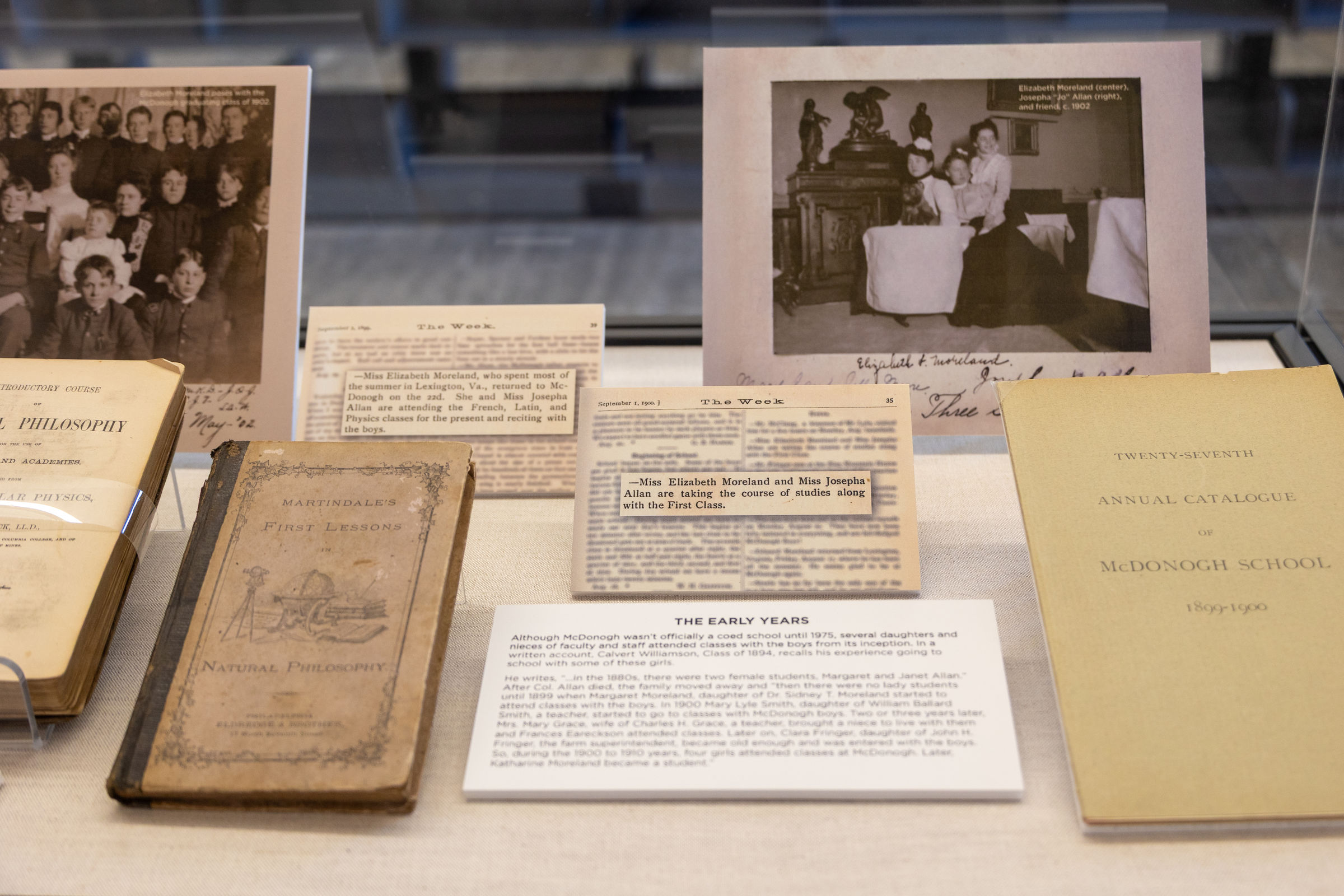
The eighth grade Humanities team spent a week in McDonogh's Wilson | Young Archives and Special Collections exploring how the School's rich history can enhance their students' understanding of events. "McDonogh has been tied to some of the most critical events of the 20th century, from the New Deal to the Moon Landing," says Julia Chandler. "The richness of the School's historical legacy makes the Archives an ideal setting for the critical-thinking skills we want our eighth graders to build."
Chandler and her colleagues have created activities that will bring students into the School's Archives to explore primary source documents — including correspondence between longtime teacher and Headmaster Duncan Campbell Lyle and McDonogh alumni serving in World War I, who sent letters from the front lines detailing the struggles of war and life in the trenches.
"We are truly fortunate to have primary sources — letters, photographs, weeklies, newspaper articles, and government documents — to help bring these stories to life," Chandler says. "Through archival research, McDonogh students will better understand not just the breadth of history, but their own School's place in it."
Digging into the past went well beyond the archives. Upper School History teacher Riley Valentine traveled to Brussels to learn about the Belgian colonization of the Congo and how the country grapples with this history. They look forward to applying their firsthand perspective to lessons on imperialism and the ongoing effects of colonization.
McDonogh's fields, streams, woods, ponds, and watersheds served as a summer classroom for Lower School educators passionate about outdoor and experiential learning. Following the lead of Josh Jones, Director of 800-Acre Labs and Upper School science teacher, the group explored the School's diverse ecosystems and collaborated on new ways the campus can become a living classroom across grade levels and disciplines.
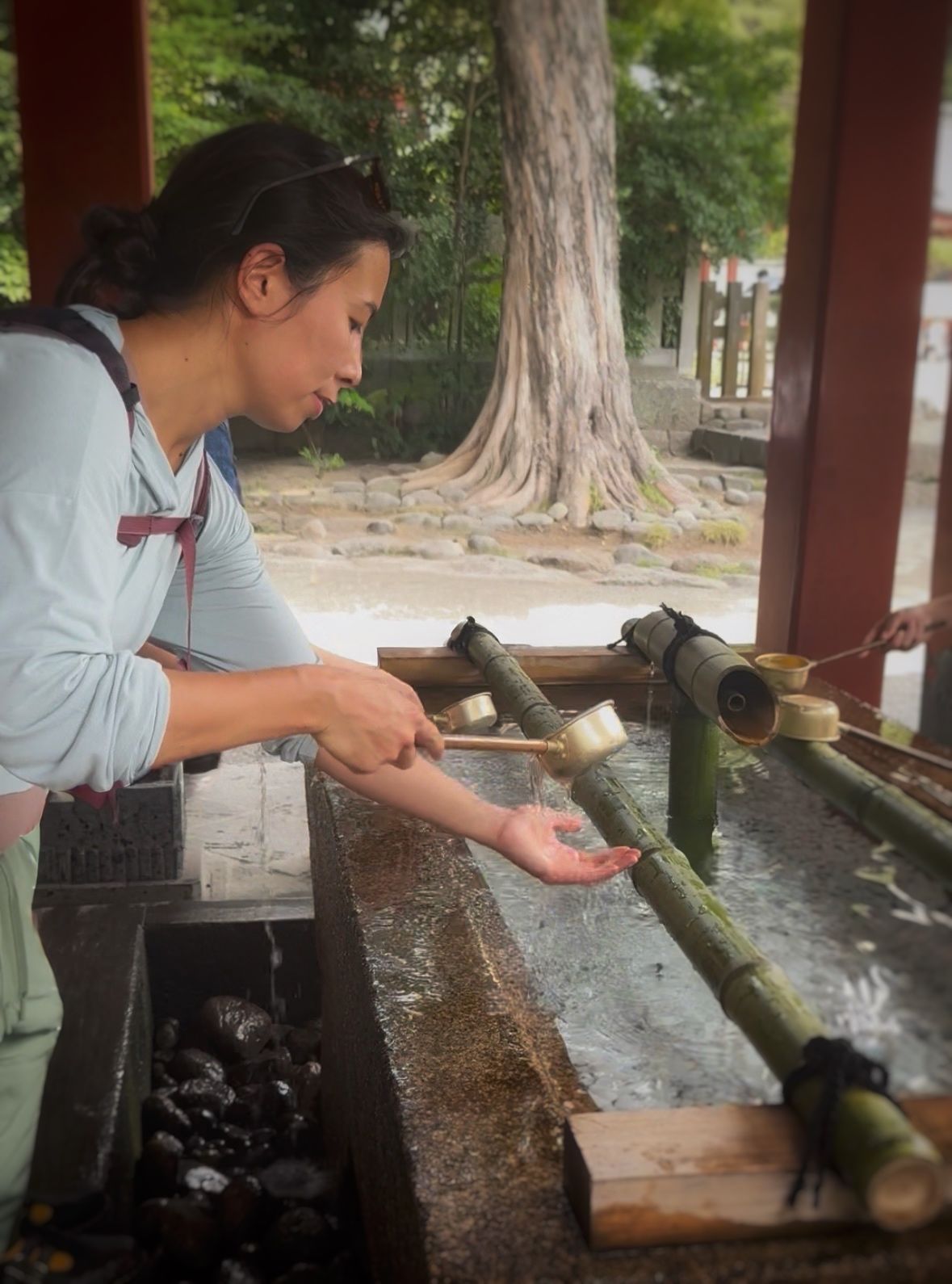
Jess Bastidas washes her hands — a symbolic purification ritual — before entering a Tsurugaoko Hachimangu, Shinto Shrine in Kamakura, Japan.
Upper School visual arts teacher Jess Bastidas traveled further afield and spent three weeks in Japan, immersing herself in the country's historic and contemporary artworks and researching traditional craft techniques, including woodblock printing, lacquerware, and washi papermaking. During her trip, she came to understand how art extends beyond museums — how ceramics, architecture, and even food presentation shape the rhythms of daily life.
Back in her classroom, Bastidas plans to encourage students to reflect on how intentionality, patience, respect for materials, and generational knowledge directly influence creative practice. "I hope students will see artmaking not only as a product, but as a process that connects history, culture, and everyday human experience," she says.
After 30 years of teaching choir and drama and directing student productions, it would be easy to run on autopilot — but Middle School teacher Suzanne Eldridge was energized after attending a weekend-long Broadway Teachers Workshop in New York City. Surrounded by working professionals, she discovered new techniques for coaching students on performance and delivery. She says, "I came away with fresh energy and concrete tools I can bring directly into our productions, keeping my teaching alive for our students."
Whether in Japan, New York, Brussels, or the School's own archives and fields, McDonogh's commitment to professional development runs through every experience. It is ultimately an investment in faculty — and in every student they teach.

 The eighth grade Humanities team spent a week in McDonogh's Wilson | Young Archives and Special Collections exploring how the School's rich history can enhance their students' understanding of events. "McDonogh has been tied to some of the most critical events of the 20th century, from the New Deal to the Moon Landing," says Julia Chandler. "The richness of the School's historical legacy makes the Archives an ideal setting for the critical-thinking skills we want our eighth graders to build."